Writing Arabic Product Descriptions That Actually Sell
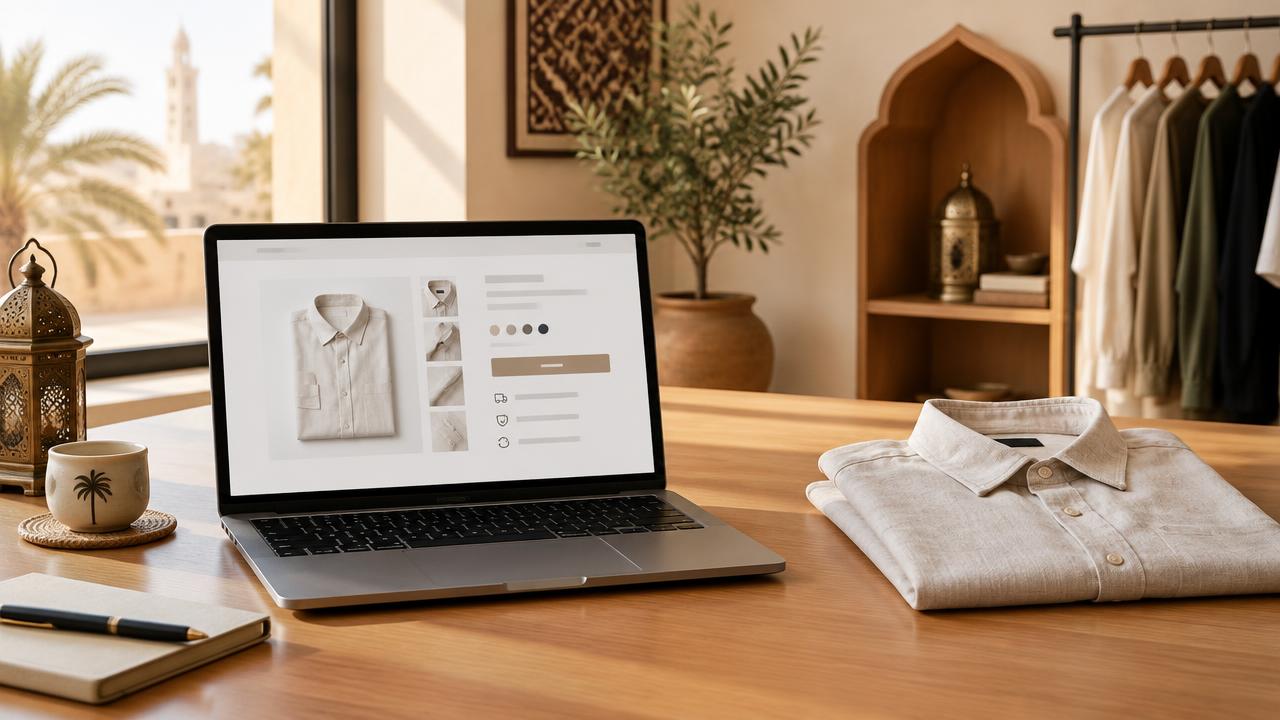
Most Arabic product pages in small stores are machine translations of English copy. They read stiffly, they miss the words shoppers actually search for, and they rank poorly because nobody types those phrases.
Write for search, not for translation
Shoppers search in the dialect and register they speak. Someone looking for an oversized shirt may search a transliterated English word, a Modern Standard Arabic term, or a colloquial one — and those are three different keywords. Check which variant real buyers use in your market before you commit to wording in your titles.
A structure that works
Ready to try it on your own products?
Upload a product photo and get studio-ready shots in minutes — no models, no photographer.
Register matters
Formal Modern Standard Arabic suits luxury and institutional brands. A warm colloquial tone suits everyday fashion and reads as local rather than imported. Pick one and stay consistent across the store, your ads and your support replies. Mixing the two mid-page feels careless.
Technical details that affect ranking
lang="ar" and dir="rtl" on Arabic pages, not just a font swap.Common mistakes
Speed it up without losing voice
Generate a first draft from your product attributes, then edit for dialect and brand voice. The draft handles structure and completeness; you handle the words that make it sound like a person from your market wrote it.
Read next
How to Shoot Product Photos With Your Phone (That AI Can Actually Improve)
A repeatable phone setup for clothing and product shots, and the reference photos AI tools need to give you clean results.
Read article
Nine Product Photo Mistakes That Quietly Cost You Sales
The recurring issues we see in small-store catalogs, and the fix for each one.
Read articleReady to try it on your own products?
Upload a product photo and get studio-ready shots in minutes — no models, no photographer.